

Amla vs. Multani Mitti: which natural treatment should you choose for your hair?
Among natural hair treatments, Amla and Multani Mitti are two of the most widely used due to their effectiveness and long Ayurvedic tradition. Although they may seem similar because both come in powder form and are applied as a mask, the reality is that they act very differently.
1. Amla: nutrition and strength from the root
Amla, also known as Indian gooseberry, is one of the most valued ingredients for naturally strengthening hair. Its rich composition of vitamin C and antioxidants helps improve scalp health, stimulate growth, and add shine.
Its most notable benefits include reduced hair loss, stimulated growth, improved shine and softness, and natural frizz control. It is a very suitable treatment for fine, weak, dull, or breakage-prone hair.
2. Multani Mitti: deep purification and natural volume
Multani Mitti, known as “Fuller's earth,” is a natural clay with great purifying power. It is used to deeply cleanse the scalp, remove impurities, absorb excess oil, and remove product residue.
Its results are especially noticeable in the form of more volume, a feeling of "loose" hair, reduced frizz, and revitalized scalp. It is especially useful for hair that accumulates products, oily hair, or those seeking a more intense cleansing without resorting to chemicals.
3. How to use each treatment
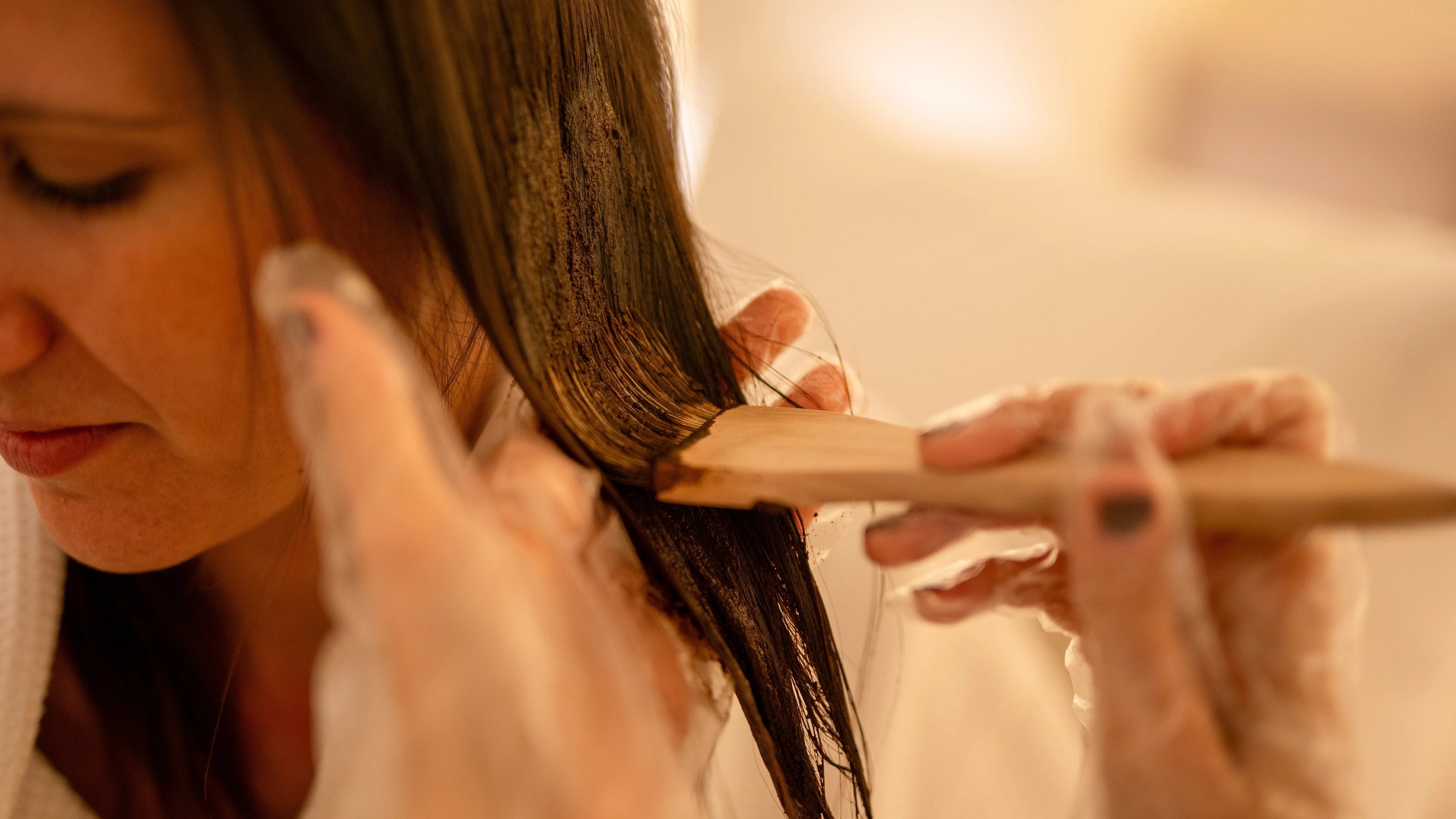
Although both are mixed with hot water until a paste is obtained, the application varies slightly.
- Amla is usually applied to damp hair and left on for 30 to 45 minutes before rinsing.
- Multani Mitti, on the other hand, is recommended to be applied to dry or freshly washed hair, leaving it on for 20 to 30 minutes. As it is an absorbent clay, it is advisable to use conditioner afterward if the hair is very dry.
4. Which treatment is right for you?
If your priority is to strengthen hair, stimulate its growth, gain shine, and control frizz, Amla is the best option. It is a nourishing treatment that helps improve hair quality from the root.
If what you need is a deep cleansing that removes grease, toxins, and residue, or if you are looking for more volume and a fresher scalp, then Multani Mitti will be more suitable. Its purifying action gives hair a "reset" that is often noticeable from the first use.
5. Pros and cons
- Amla has the advantage of being a very nourishing and strengthening treatment, although if the hair is very oily, it can be too intense if used too frequently.
- Multani Mitti deeply cleanses and adds volume, but it can dry out if applied excessively to very dry hair, so it is advisable to accompany it with a moisturizing treatment.
6. Conclusion
Amla and Multani Mitti do not compete with each other; they complement each other. It all depends on what your hair needs at any given time. If you are looking for strength and nourishment, start with Amla. If you need to purify and add volume, choose Multani Mitti.
In fact, many people combine both: Multani Mitti every 10 or 15 days for a deep cleanse, and Amla weekly to strengthen and keep hair healthier.

Leave a comment
This site is protected by hCaptcha and the hCaptcha Privacy Policy and Terms of Service apply.