
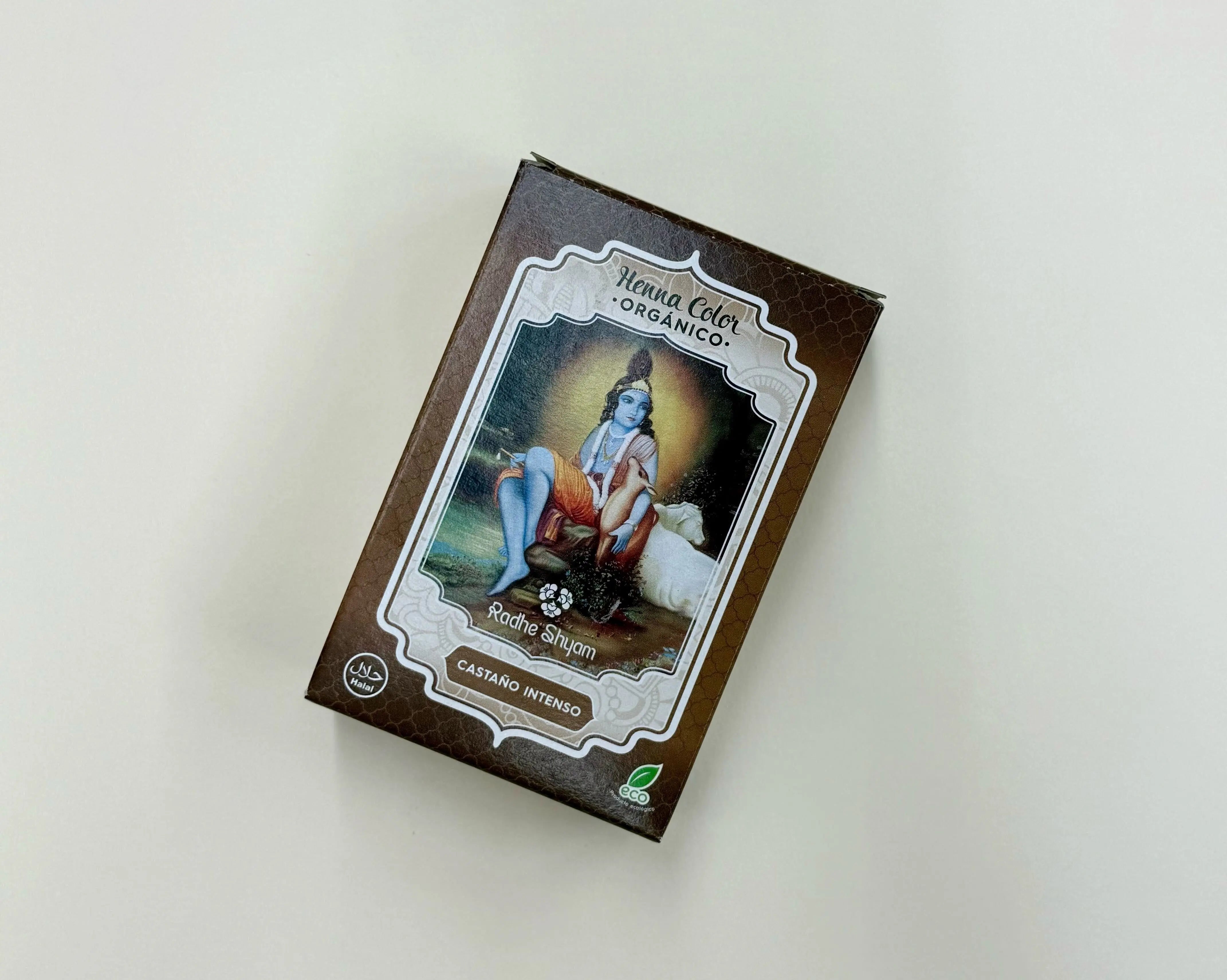
Brown Henna: Radhe Shyam Shade Guide
Brown henna colors by superposition, meaning it adds pigment and reflection to your base without bleaching. When the formulation is 100% plant-based and the technique is correct, the result is a full-bodied brown with shine and a more compact hair fiber feel. As second-generation manufacturers with over forty years in natural cosmetics, we have seen that success does not depend solely on the recipe: it is determined by the choice of shade based on your starting point, the density of the paste, the timing, and post-care.
Why choose 100% plant-based brown henna?
Beyond color, henna provides a phytocosmetic layer that gently envelops the cuticle. This results in less frizz, greater shine, and a silkier feel with continuous use. It contains no bleaches or ammonia, making it compatible with sensitive scalps. Furthermore, it allows you to modulate the undertone: you can aim for a warm brown (hazelnut, chocolate) or cool it with mixtures for a deeper finish. The great advantage is visual consistency: the brown integrates with your base without a "helmet" effect and evolves harmoniously with washes.
How to choose the right shade (base, gray hair, undertone, and porosity)
Start with your base. If it's dark blonde or light brown, soft browns will add reflection and uniformity without excessive darkening; if you are already medium brown, you can gain depth and coverage with more pigmented variants. In the presence of gray hair, choose formulas with higher fixation or use a double application (roots first, then lengths). The undertone also guides: if golden tones suit you, look for warm options; if you prefer cool tones, rely on mixtures that cool the result. Porosity dictates the timing: the more porous the fiber, the faster it absorbs pigment; adjust to avoid over-saturating.
Types of Radhe Shyam brown henna
Light Brown — soft and luminous reflection
Designed to lighten light bases by half a shade while maintaining transparency. It's perfect for those who don't want to "look dyed" but rather more luminous. For first gray hairs, the key is a creamy paste and thin, well-worked layers; 60 minutes is usually enough to balance without darkening.
Medium Brown — the hazelnut balance
This is our "wild card" for unifying brown bases. It leaves a clean hazelnut outdoors and a very natural look indoors. It works especially well on hair with tone variations between roots and mid-lengths, where cohesion is sought without losing movement. If the hair fiber is dry, a careful rinse and a light conditioner post-coloring help seal in the shine.
Dark Brown — coverage with a chocolate hue
Ideal for medium bases with partial gray hair. It provides an enveloping chocolate and a sensation of greater thickness. We recommend mixing with water at 50–60 °C until it reaches a yogurt-like texture to improve adherence. For very fine hair, the paste density makes a difference: creamier for coverage, more fluid for toning.
Deep Dark Brown — maximum depth and cooler tone
When the goal is a very dark brown without chemicals, this variant offers intensity and a cooler color line. It provides uniformity at roots with visible gray hair and adds elegance to mid-lengths and ends. For very porous fibers, it's advisable to monitor the minutes to avoid over-saturating; a good strand test prevents surprises.
Chocolate Brown (Botanical) — warm, luscious, and shiny
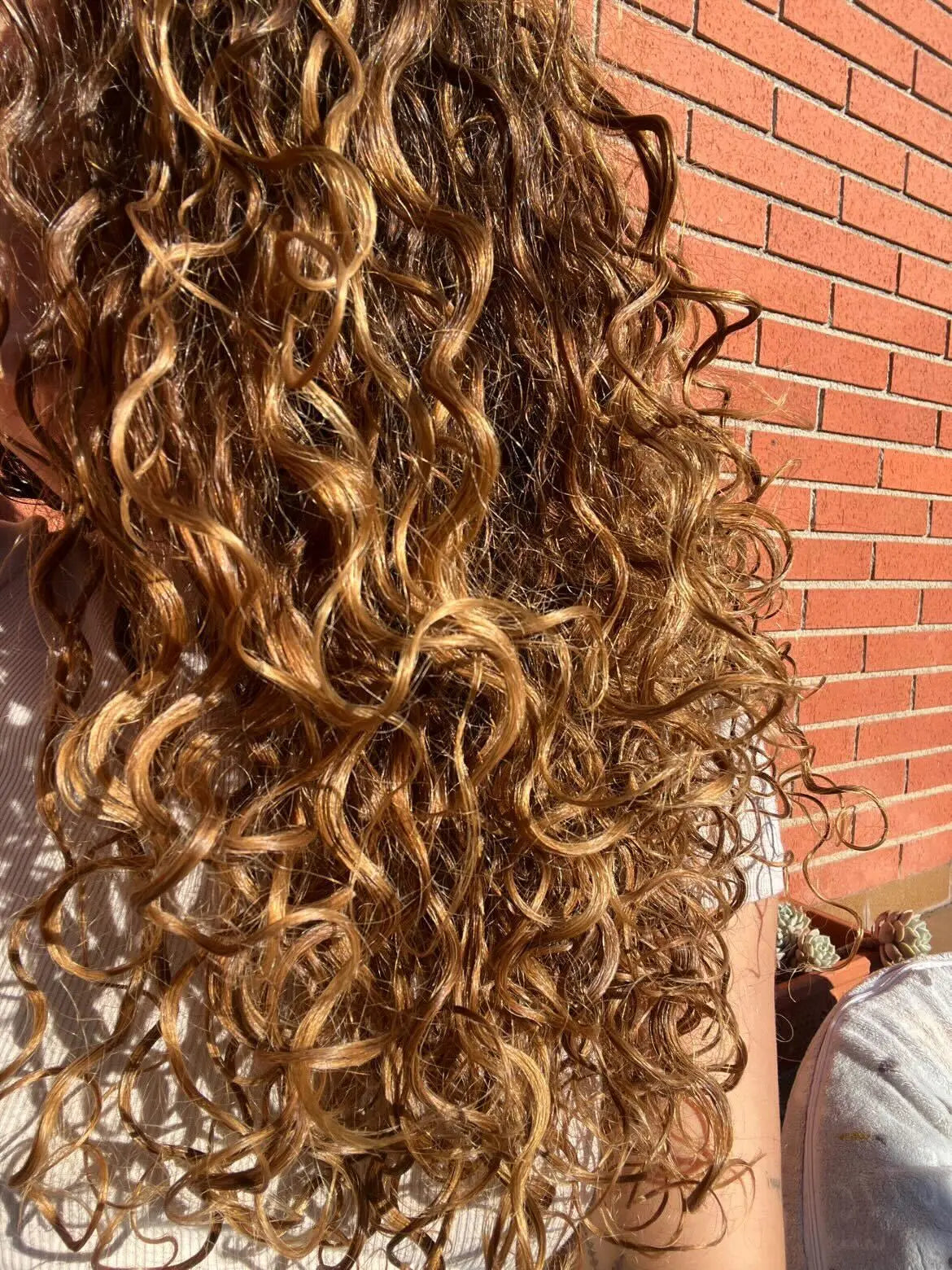
Flattering for skin tones that benefit from warm reflections. It revitalizes dull lengths without turning coppery. It's a great resource when you want to "brighten up" subtly: a warm veil that enhances shine indoors. If your base tends to be golden, this option refines it and makes it more uniform.
Coppery Brown — sun-kissed touch without intense red
Adds honey and light without going into distinct reds. On light bases, a natural sun-kissed look is perceived; on medium bases, it leaves an elegant warm halo. It is very useful for softening harshness in cool brown hair, especially for faces that need a little warmth around the face.
Mahogany Brown — character with a reddish hint
For those who want a brown with personality. The mahogany nuance enhances the movement of the cut and creates depth in wavy hairstyles. It works well for refreshing mid-lengths and ends when the root remains cooler: the contrast looks sophisticated and facilitates maintenance.
Intense Brown — concentrated pigment and anchorage
The technical option for stubborn gray hair or very porous hair. It provides superior anchorage without losing naturalness, and is the ideal base for double application: first roots with Intense, then a global pass with the chosen shade to harmonize.
Katam and mixes with indigo — depth and neutralization of warm tones
More than a "color," these are tools. Katam and indigo help cool the undertone and gain depth for dark goals. They can be used in direct mixture or as a preliminary layer when unwanted orange tones appear. The proportion and timing depend on the base: that's why we insist on a strand test.
Application and timing
Work on clean, silicone-free hair so that the paste adheres to the fiber. Mix the powder with hot water (50–60 °C) until it forms a creamy, lump-free texture; let it sit for 5 to 10 minutes to homogenize. Divide into sections and apply from roots to ends, saturating well.
As a general guide: 45–60 minutes for a subtle reflection, 60–90 minutes for medium coverage and hazelnut-chocolate finishes, and 90–120 minutes or a double application when seeking deep dark or when you have very white gray hair. When rinsing, use only water until it runs clear; avoid shampoo on the first day. The color settles in 24–48 hours due to natural oxidation, so the final shade is best seen the next day.
Maintenance: how to extend your plant-based brown
The usual duration ranges from 4 to 8 weeks depending on washes, porosity, and routine. To extend it, opt for gentle shampoos, space out washes, and avoid extreme heat in the first 48 hours. Short color baths with your favorite variant revive shine without over-saturating; root touch-ups are usually scheduled every 3–5 weeks, while lengths can go 6–8. If you notice dryness after rinsing, a light silicone-free conditioner or a plant-based mask restores softness without stripping the pigment.

Leave a comment
This site is protected by hCaptcha and the hCaptcha Privacy Policy and Terms of Service apply.